UNIT:1
-BASIC GEOMETRY CONCEPS AND DEFINITIONS:
GEOMETRY:It's an area of knowledge witch studies any elements and operations on/in the plane such as points , lines or shapes.It comes from the Greek geo=earth , metry=measurement.
POINT:In geometry a point can be defined as the place of location were two lines intersect.A point hasn't got dimensions , no height and no width.
DITERENTS FORMS:
十 Х • ⊕ ⊙ ༓ A B C D E F
LINES:A one-diensional object formed of infinite points.It hasn't got end points and continues forever in a plane.
RAY:A line which begins at a particular point (called the end point) and extends and lessly in one direction.
MIDPOINT:It is the point that is halfway between the end-points of the line segment.
END-POINT:And the end-point is a point at wich a line segment or a ray ends or starts.LINE SEGMENT:It is a line with two end-points.
➡️L I N E
➡️L I N E S E G M E N T
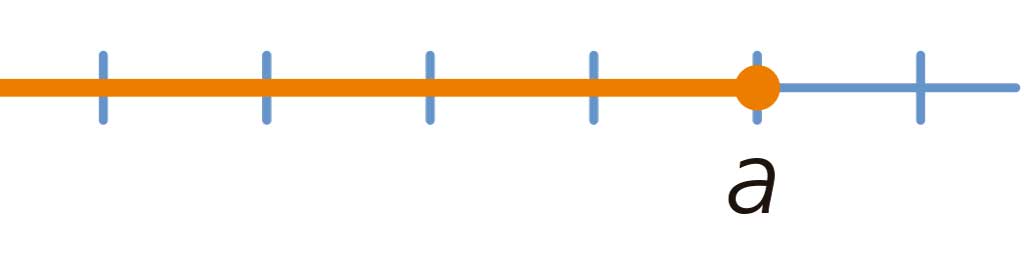
➡️R A Y

M I D P O I N T
LENGHT:Measurement of something from end to end.
---------------------------------------------- =2cm
-GEOMETRY DRAWING AND SUPPLIES CONCEPTS AND DEFINITIONS:
FREEHAND:Draw by hand without guiding instrument , meuserements.
LINE/TECHNICAL DRAWING :It is a drawing made with the help of supplies . It is usually the kind of drawing used for architecture or enginering plans .
COMPASS:It is a tool for drawing circles and arcs and also for measuring distance between points , consisting in two arms linked by a hinge.
CIRCLE WITH THE COMPASS
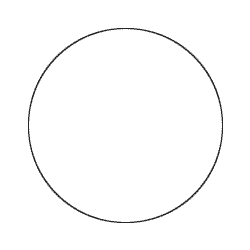
SET-SQUARE (UK) TRIANGLES (US):There are two specials rulers with triangular shape . One is called the 45º triangle and other 60º/30º triangle . Both have 90º angle . They are used for makin different angles.
ERASER:Used for eliminate the mistakes .
RULER:For makin lines .
LINE SEGMENT COPING:Givent the segment AB , copy it with the same lenght with a compass.
|———————| |──────────|———————
A B A B
ADICTION:(suma) AB + EF •The new segment is AF
|—————————|
A B
|———| |─────────────|─────────|———
C D A' B' E' F'
|——————|
E F
SUBTRACTION:(resta) EF - CD •The new segment is ED
|─────────|———
E' D'
MULTIPLY:(multiplicación) AB 🇽 3
|──────────────|──────────────|──────────────|————
A' B'A' B'A' B'
DIVISION:(división) AB ÷ 2

PERPENDICULAR LINE OF A SEGMENT THROUGH AN END POINT:

PERPENDICULAR LINE TO ANOTHER THROUGH AN OUTER POINT OF IT:

PARALLEL LINE TO A GIVEN LINE AT A GIVEN DISTANCE:

IMPORTANT DEFINITIONS ABOUT CIRCLES:
CIRCLE:Set of points at the same distance to a point called center.
CIRCUNFERENCE:It is the full lenght of a circle.
RADIUS:It is a lenght of a line segment from the center to its perimeter.
CENTER:It is a point equidistant to any points on a circle.
DIAMETER:A line segment that pases though the center and conects two points of a circle. Its lenght is double than the radius.
CHORD:A line segment witch conects two points of the circle not trough the center.
ARC:Segment of a circle.
ARROW:Its a line segment enter chord and arc pass to the center.
IMPORTANT DEFINITIONS ABOUT ANGLES AND LINE:
PARALLELS:They are two lines wich never intersect them selves so all their points are equidistant.
────────────
────────────
PERPENDICULAR:They are lines wich meet forming four right angels = 90º
OBLIQUE:When two lines cross but not forming any angles.
ANGLES:It's a figure formed by two rays sharing a common endpoint (veter)
TYPES OF ANGLES:(positions)
COMPLEMENTARY:They are couples of angles witch sum is 90º

SUPLEMENTARY:They are couples of angles witch sum is 90º

TYPES OF ANGLES:(form)
 -Right
-Obtuse
-Acute
-Flat
-Complet
-Cero
THE ANGLE BISECTOR:When I divide on angle into two equals parts .

OPERATIONS WITH ANGLES:
ADICTION:
SUBTRACTION:
MULTIPLY:
DIVIDE:
POLIGONS:
•NUMBER OF SIDES:
NAMES: TYPES:
-Triangles(3) •Concave / convex
-Quadrilaterals(4) •Start polygons
-Pentagonon(5) •Regular / irregular
-Hexagonon(6) •Inscribe
-Heptagonon(7) •Guiven the side
-Octogonon(8) •Other items
-Decagon(10) Elements:
-Dodecagon(12) -Sides
-Diagonals
-Verties
-Altitud
START POLIGONS:It's a particular polygon case with a start shape , created out of linking together non consecutive vertices of a regular polygon.
INCREBED POLYGONS:They are polygons place inside circule so all the vertex of the polygon are placed on the circle.
CONVEX POLIGON:Any line draw thought the polygon meets its bandary exactly twice.
NON-CONVEX:A line may be found which meter its boundary more than twince.
•Regular
•Irregular
-15º
-30º
-45º
-60º
-120º
-150º
THE TRIANGLES
It is a flat figure with three sides and three angles.

CONSTRUCTION AN EQUILATERAL TRIANGLE:

CONSTRUCTION AN EQUILATER TRIANGLE WHEN I KNOW THE RADIUS:

CONSTRUCTION AN ISOSCELS TRIANGLE WHEN I KNOW TWO SIDES:

MADE RIGHT TRIANGLE WHEN I KNOW TWO SIDES:
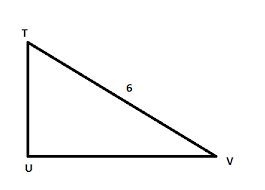
DO THE TRIANGLE WHEN I KNOW THREE SIDES:

THE CUADRILATERALS
They are polygons with four sides and four angles.
•PARALLELOGRAMS:They are cuadrilaterals with two sides of parallel opposite equal sides and two pairs opposite equal angles.
SQUARE: RHOMBUS:
-4 sides//2 by 2 - 4 sides =
-4 angles = 90º -// 2 by 2
-2 diagonals ㅗ -2 diagonals
-and ㅗ
RECTANGLE: RHOMBOID:
-4 sides // 2 by 2 -4 sides = 2 by 2
-4 angles = 90º -2 angles = 2 by 2
-2 diagonals
•NON PARALLELOGRAMS:
TRAPEZIOMS:Only one pair of sidesare paralld.
TRIGHT: ISOSCELES: SCALEN:
- 2 sides // - 2 sides // -4 sides ≠
- 2 a right = 90º - 2 sides = -2 sides //
TRAPEZOIDE:
-Sides ≠
-NON PARALLELS SIDES
DO THE SQUARE WHEN I KNOW A SIDE:
DO THE RHOMBUS WHEN I KNOW 2 DIAGONALS:
DO THE RHOMBOID WHEN I KNOW ONE SIDE AND THE ANGLE Â:
-REGULAR POLIGONS:
TRIANGLES:
TRIANGLE WHEN I KNOW ONE SIDE:
TRIANGLE WHEN I KNOW A RADIUS:
SQUARE:
CONSTRUCTION OF SQUARE WHEN I KNOW THE RADIUS:
RECTANGLE:
DO THE RECTANGLE WHEN I KNOW TWO SIDES:
DO A RECTANGLE WHEN I KNOW TWO SIDES:
SQUARE:
MAKE THE SQUARE WHEN I KNOW ONE SIDE:
MAKE THE SQUARE WHEN I KNOW A RADIUS
PENTAGON:
PENTAGON WHEN I KNOW A SIDE
PENTAGON WHEN I KNOW A RADIUS:
HEXAGON:
DO THE HEXAGON WHEN I KNOW ONE SIDE:
DO THE HEXAGON WHEN I KNOW A RADIUS:
HEPTAGON:
DO AN HEPTAGON WHEN I KNOW THE RADIUS:
START POLIGONS:
Una estrella empieza y acaba en el mismo punto.
-Start pentagon
-5 star
-6 star
-7 star
• 2 passes
• 3 passes
-8 star
• 2 passes
• 3 passes
-10 star
• 1 passes
• 2 passes
• 3 passes
-12 star
• 1 passes
• 2 passes
• 3 passes
• 4 passes
SIMMETRY:
AXIS SIMMETRY: CENTER SIMMETRY:


SIMMETRY:It is a quality of some shapes which some of thir parts are reflections of others.
REFLECTION SIMMETRY:It's a same quality witch is formed by two halves facing each other with an axis ar fold line in between as , if both side were mirror images of each other.
AXIS SIMMETRY:It is a line witch divedes a shape into two simmetry halves. Every element are the same distance from (the axis) the center.
Vocabulary:
DOT:It is a smollest and most simple element in art expresion . It's first target is to indicate a position since it doesn't follow any directions. It my have different qualities size , sharper and color.
THE DOT THREE-DIMENSIONAL CAPACITY:When de size , shapes and colors are changed the dot can create visual sensations of spacial deepress and volume.
THE DOT EXPRESIVE CAPACITY:The point has a unlimited capacity to represent images and to express ideas and emotions . To do so , usual effect are used.
OPTICAL MIX:When colors are mixed with the help of distance. Paint isn't mixed on the palette or on the opptical mix was used first by the pointillist.
LINES:It can be defined as a dot in movement. It has positions and direction in the space and one of it's principal function consits on making the dhapes out lines:
ZIG ZAG OR BROKEN LINES:They are formed by several fragments of staight lines with different directions.
WAVY LINE:They are formed by several frag merts of cured lines.
CURLY LINES:They have more curves than wavy lines and shous loops.
ESCRIBBLE:Chaotic or meaningless lines that are traced randomly , usually in first stages of chilhood or to fill in some area with a particular texture.
COMBINATIONS WITH THE LINES:
HATCHING:It's a way of shading or giving tones to the areas of objects or surface with parallel lines.
CROSS-HATCHING:It's a way of shading areas of a drawing or surfaces with parallel lines in several directions.
DASHED (or dotted) LINES:They are lines witch are not continius , formed by little traces or dots.
BLURRED:They are very soft or vanished so they are hard to see and opposite to intense and deep.
SIMPLE LINES:Those that are formed by only one line.
COMPOSITE LINES:They are lines composed by fragments of several straight and curved lines.
EXPRESSIVENESS OF LINES:
-Vertical line expressiveness: The express an ascendent or descendet movement , depending on how they are used.
-Orizontal line expressiveness: They produced visual feelings of they used too much.
-Skew line expressiveness: They produced unsteadiness and movement feelings. These feelings give indined lines and sensation of dynamisn.
A B
|———| |─────────────|─────────|———
C D A' B' E' F'
|——————|
E F
SUBTRACTION:(resta) EF - CD •The new segment is ED
|─────────|———
E' D'
MULTIPLY:(multiplicación) AB 🇽 3
|──────────────|──────────────|──────────────|————
A' B'A' B'A' B'
DIVISION:(división) AB ÷ 2
PERPENDICULAR LINE OF A SEGMENT THROUGH AN END POINT:

PERPENDICULAR LINE TO ANOTHER THROUGH AN OUTER POINT OF IT:

PARALLEL LINE TO A GIVEN LINE AT A GIVEN DISTANCE:

IMPORTANT DEFINITIONS ABOUT CIRCLES:
CIRCLE:Set of points at the same distance to a point called center.
CIRCUNFERENCE:It is the full lenght of a circle.
RADIUS:It is a lenght of a line segment from the center to its perimeter.
CENTER:It is a point equidistant to any points on a circle.
DIAMETER:A line segment that pases though the center and conects two points of a circle. Its lenght is double than the radius.
CHORD:A line segment witch conects two points of the circle not trough the center.
ARC:Segment of a circle.
ARROW:Its a line segment enter chord and arc pass to the center.
IMPORTANT DEFINITIONS ABOUT ANGLES AND LINE:
PARALLELS:They are two lines wich never intersect them selves so all their points are equidistant.
────────────
────────────
PERPENDICULAR:They are lines wich meet forming four right angels = 90º
OBLIQUE:When two lines cross but not forming any angles.
ANGLES:It's a figure formed by two rays sharing a common endpoint (veter)
TYPES OF ANGLES:(positions)
COMPLEMENTARY:They are couples of angles witch sum is 90º
SUPLEMENTARY:They are couples of angles witch sum is 90º
TYPES OF ANGLES:(form)
-Obtuse
-Acute
-Flat
-Complet
-Cero
THE ANGLE BISECTOR:When I divide on angle into two equals parts .

OPERATIONS WITH ANGLES:
ADICTION:
SUBTRACTION:
MULTIPLY:
DIVIDE:
POLIGONS:
•NUMBER OF SIDES:
NAMES: TYPES:
-Triangles(3) •Concave / convex
-Quadrilaterals(4) •Start polygons
-Pentagonon(5) •Regular / irregular
-Hexagonon(6) •Inscribe
-Heptagonon(7) •Guiven the side
-Octogonon(8) •Other items
-Decagon(10) Elements:
-Dodecagon(12) -Sides
-Diagonals
-Verties
-Altitud
START POLIGONS:It's a particular polygon case with a start shape , created out of linking together non consecutive vertices of a regular polygon.
INCREBED POLYGONS:They are polygons place inside circule so all the vertex of the polygon are placed on the circle.
CONVEX POLIGON:Any line draw thought the polygon meets its bandary exactly twice.
NON-CONVEX:A line may be found which meter its boundary more than twince.
•Regular
•Irregular
-15º
-30º
-45º
-60º
-120º
-150º
THE TRIANGLES
It is a flat figure with three sides and three angles.
CONSTRUCTION AN EQUILATERAL TRIANGLE:
CONSTRUCTION AN EQUILATER TRIANGLE WHEN I KNOW THE RADIUS:
CONSTRUCTION AN ISOSCELS TRIANGLE WHEN I KNOW TWO SIDES:
MADE RIGHT TRIANGLE WHEN I KNOW TWO SIDES:
DO THE TRIANGLE WHEN I KNOW THREE SIDES:
THE CUADRILATERALS
They are polygons with four sides and four angles.
•PARALLELOGRAMS:They are cuadrilaterals with two sides of parallel opposite equal sides and two pairs opposite equal angles.
SQUARE: RHOMBUS:
-4 sides//2 by 2 - 4 sides =
-4 angles = 90º -// 2 by 2
-2 diagonals ㅗ -2 diagonals
-and ㅗ
RECTANGLE: RHOMBOID:
-4 sides // 2 by 2 -4 sides = 2 by 2
-4 angles = 90º -2 angles = 2 by 2
-2 diagonals
•NON PARALLELOGRAMS:
TRAPEZIOMS:Only one pair of sidesare paralld.
TRIGHT: ISOSCELES: SCALEN:
- 2 sides // - 2 sides // -4 sides ≠
- 2 a right = 90º - 2 sides = -2 sides //
TRAPEZOIDE:
-Sides ≠
-NON PARALLELS SIDES
DO THE SQUARE WHEN I KNOW A SIDE:
DO THE RHOMBUS WHEN I KNOW 2 DIAGONALS:
DO THE RHOMBOID WHEN I KNOW ONE SIDE AND THE ANGLE Â:
-REGULAR POLIGONS:
TRIANGLES:
TRIANGLE WHEN I KNOW ONE SIDE:
TRIANGLE WHEN I KNOW A RADIUS:
SQUARE:
CONSTRUCTION OF SQUARE WHEN I KNOW THE RADIUS:
RECTANGLE:
DO THE RECTANGLE WHEN I KNOW TWO SIDES:
DO A RECTANGLE WHEN I KNOW TWO SIDES:
SQUARE:
MAKE THE SQUARE WHEN I KNOW ONE SIDE:
MAKE THE SQUARE WHEN I KNOW A RADIUS
PENTAGON:
PENTAGON WHEN I KNOW A SIDE
PENTAGON WHEN I KNOW A RADIUS:
HEXAGON:
DO THE HEXAGON WHEN I KNOW ONE SIDE:
DO THE HEXAGON WHEN I KNOW A RADIUS:
HEPTAGON:
DO AN HEPTAGON WHEN I KNOW THE RADIUS:
START POLIGONS:
Una estrella empieza y acaba en el mismo punto.
-Start pentagon
-5 star
-6 star
-7 star
• 2 passes
• 3 passes
-8 star
• 2 passes
• 3 passes
-10 star
• 1 passes
• 2 passes
• 3 passes
-12 star
• 1 passes
• 2 passes
• 3 passes
• 4 passes
SIMMETRY:
AXIS SIMMETRY: CENTER SIMMETRY:
SIMMETRY:It is a quality of some shapes which some of thir parts are reflections of others.
REFLECTION SIMMETRY:It's a same quality witch is formed by two halves facing each other with an axis ar fold line in between as , if both side were mirror images of each other.
AXIS SIMMETRY:It is a line witch divedes a shape into two simmetry halves. Every element are the same distance from (the axis) the center.
Vocabulary:
DOT:It is a smollest and most simple element in art expresion . It's first target is to indicate a position since it doesn't follow any directions. It my have different qualities size , sharper and color.
THE DOT THREE-DIMENSIONAL CAPACITY:When de size , shapes and colors are changed the dot can create visual sensations of spacial deepress and volume.
THE DOT EXPRESIVE CAPACITY:The point has a unlimited capacity to represent images and to express ideas and emotions . To do so , usual effect are used.
OPTICAL MIX:When colors are mixed with the help of distance. Paint isn't mixed on the palette or on the opptical mix was used first by the pointillist.
LINES:It can be defined as a dot in movement. It has positions and direction in the space and one of it's principal function consits on making the dhapes out lines:
ZIG ZAG OR BROKEN LINES:They are formed by several fragments of staight lines with different directions.
WAVY LINE:They are formed by several frag merts of cured lines.
CURLY LINES:They have more curves than wavy lines and shous loops.
ESCRIBBLE:Chaotic or meaningless lines that are traced randomly , usually in first stages of chilhood or to fill in some area with a particular texture.
COMBINATIONS WITH THE LINES:
HATCHING:It's a way of shading or giving tones to the areas of objects or surface with parallel lines.
CROSS-HATCHING:It's a way of shading areas of a drawing or surfaces with parallel lines in several directions.
DASHED (or dotted) LINES:They are lines witch are not continius , formed by little traces or dots.
BLURRED:They are very soft or vanished so they are hard to see and opposite to intense and deep.
SIMPLE LINES:Those that are formed by only one line.
COMPOSITE LINES:They are lines composed by fragments of several straight and curved lines.
EXPRESSIVENESS OF LINES:
-Vertical line expressiveness: The express an ascendent or descendet movement , depending on how they are used.
-Orizontal line expressiveness: They produced visual feelings of they used too much.
-Skew line expressiveness: They produced unsteadiness and movement feelings. These feelings give indined lines and sensation of dynamisn.

This comment has been removed by the author.
ReplyDeleteI think : Eva has got the perfect blog.
ReplyDelete